

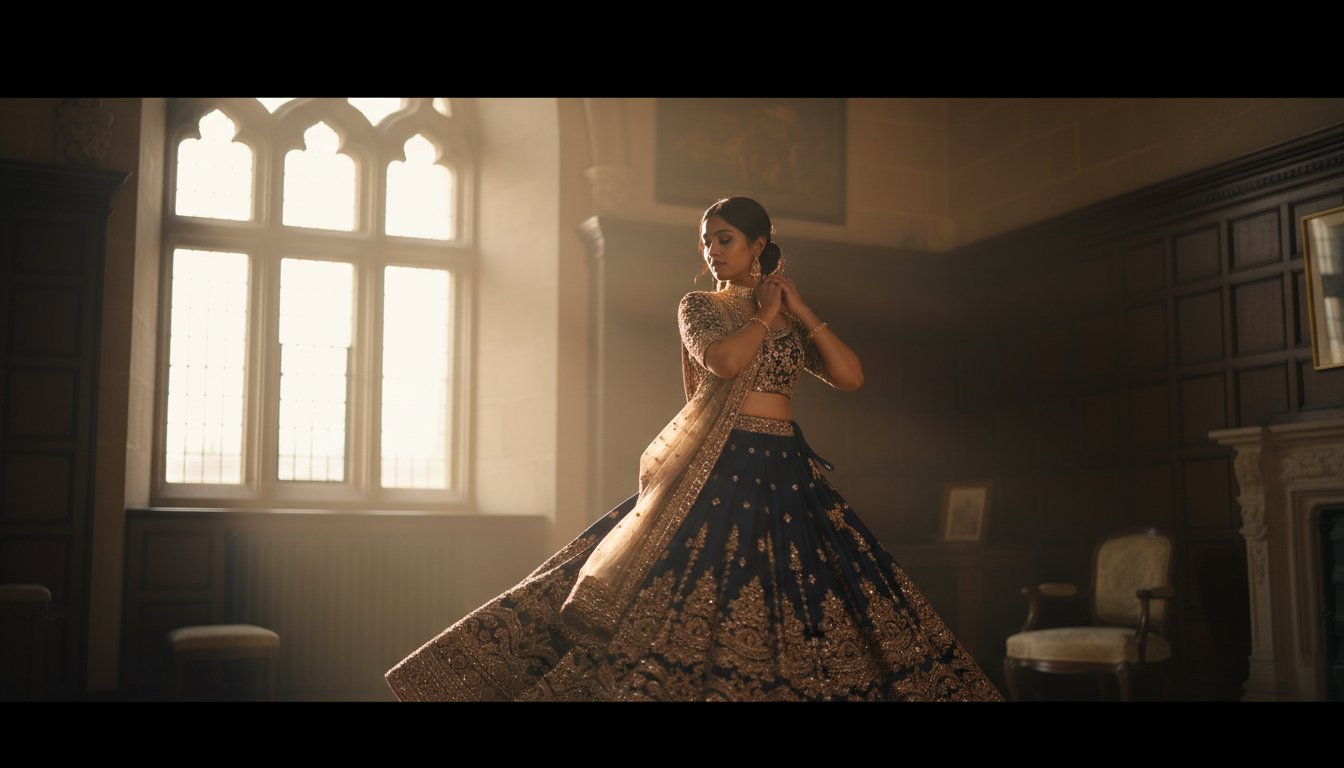
Last October, a bride named Amara stood beneath the vaulted ceilings of a historic London manor, her breath catching as she realised her heavily embellished lehenga, though stunning, made it nearly impossible to glide toward her groom during their golden hour portraits. You’ve likely felt that same tension between the desire for intricate artistry and the need for effortless grace. It’s a common worry when exploring the vast world of asian bridal dresses, particularly when you’re trying to envision how those rich textures will translate through a camera lens in the soft, unpredictable light of a UK venue.
You deserve a gown that doesn’t just sit beautifully but breathes with you, allowing your story to unfold naturally. I’ll help you find that perfect silhouette that honours your heritage while ensuring you look breathtaking in every single frame of your wedding gallery. We’ll explore photogenic silhouettes for 2026, the secrets of coordinating with your partner, and how to select fabrics that dance with the light of your chosen setting.
Key Takeaways
- Discover how to weave ancestral heritage with contemporary London flair to select a gown that serves as a timeless symbol of your family legacy.
- Identify the most flattering silhouettes for 2026, exploring the regal impact of traditional lehengas and the elegant resurgence of the Anarkali for your reception.
- Learn which fabrics and colours of asian bridal dresses perform best under the UK’s unique light, ensuring your palette remains luminous and evocative in every photograph.
- Gain practical insights into navigating your wedding day with grace, featuring professional tips for moving in heavy couture to ensure you remain comfortable and camera-ready.
- Understand the importance of an unobtrusive, storytelling approach to photography that preserves the intricate details and authentic emotions of your bridal journey.
The Art of the Asian Bridal Dress: More Than Just a Wedding Outfit
A wedding gown is rarely just a garment; it’s a living archive. In many cultures, asian bridal dresses serve as a woven tapestry of family history, carrying the weight of ancestors and the bright hopes of a new beginning. They’re the visual anchor of your entire photographic gallery. When you look back at your portraits in 2056, the fabric should still speak of elegance and identity. It’s about more than current trends. It’s about a preservation of legacy.
For 2026, London’s bridal scene is witnessing a delicate, sophisticated shift. We’re seeing a fusion of deep-rooted heritage and high-fashion urbanity. It’s about finding that exquisite balance between a 10-kilogram hand-embroidered masterpiece and the effortless grace required to move through a contemporary city venue. This choice dictates the “photographic longevity” of your images. Trends might fade, but quality and cultural authenticity remain timeless. These garments are part of global wedding traditions that celebrate identity through intricate craftsmanship and symbolic colour palettes.
The Cultural Spectrum: Indian, Pakistani, and Sikh Bridal Styles
British celebrations in 2026 often embrace a breathtaking blend of traditions. Indian Hindu brides frequently choose the auspicious power of deep reds and burnt oranges. In contrast, Pakistani Nikah ensembles often lean toward soft, ethereal pastels or heavy silver zardosi work on ivory canvases. For Sikh brides, the dupatta is a sacred focal point during the Anand Karaj, requiring a photographer who understands the reverence of the ceremony. Many UK couples now blend these aesthetics, creating a bespoke visual language that honours multiple backgrounds within a single celebration.
Why Your Dress Choice Dictates Your Wedding Story
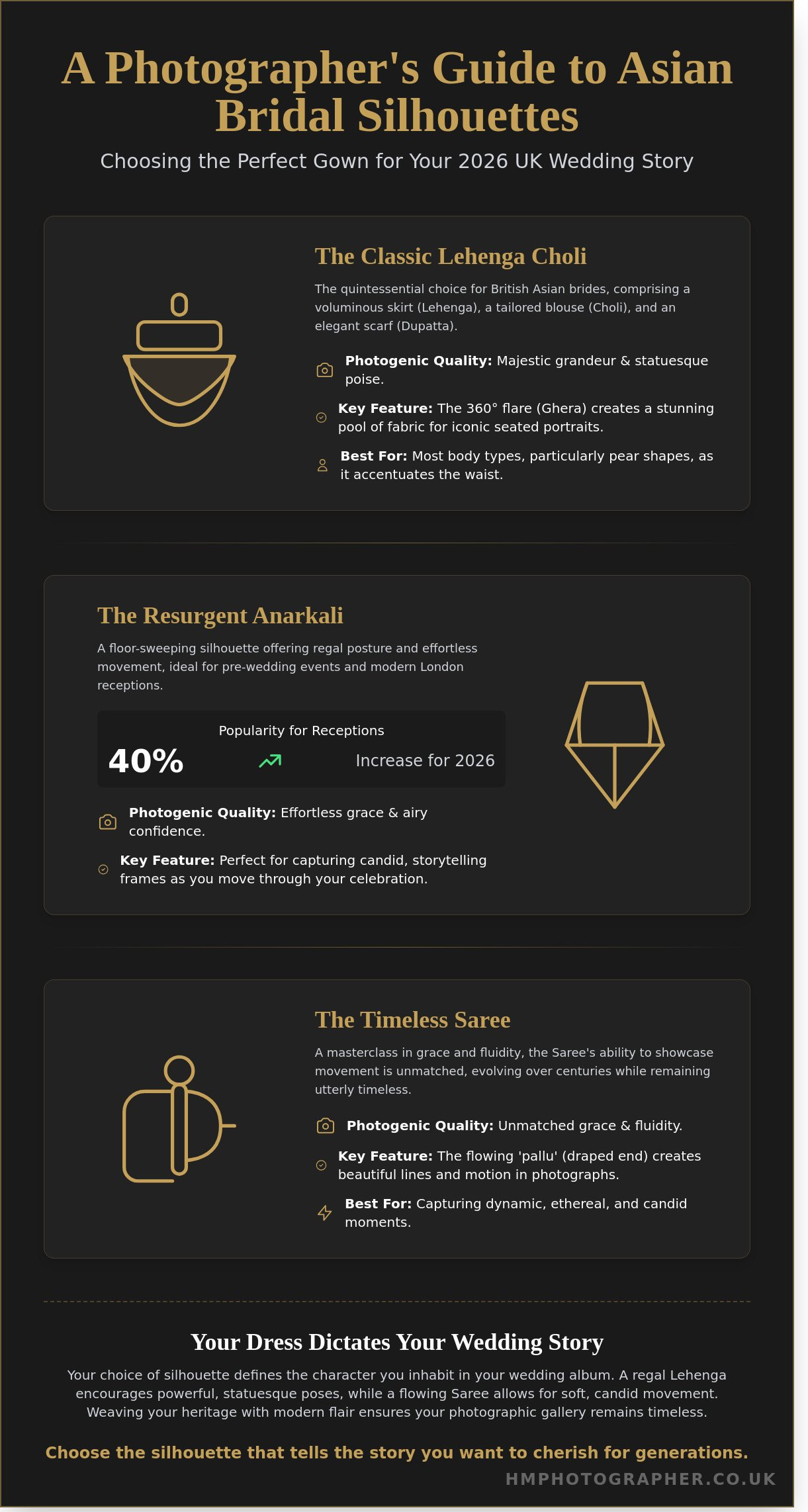
Your attire defines the character you inhabit in your wedding album. A heavy, regal Lehenga demands a certain statuesque poise, creating a mood of majestic grandeur. Conversely, a flowing, lightweight Saree allows for more candid, ethereal movement, perfect for those quiet, stolen moments. It’s vital to consider choosing your Asian wedding photographer early in your planning process. This ensures your visual storyteller understands how to light the specific textures of your asian bridal dresses and capture the natural movement of your silhouette. Every bead and thread tells a story; make sure it’s the one you want to tell for generations.
Exploring Popular Silhouettes: From Royal Lehengas to Timeless Sarees
The UK’s modern bridal landscape is a beautiful tapestry of tradition and contemporary flair. Choosing from the vast array of asian bridal dresses isn’t just about fashion; it’s about how the fabric moves with you and how it tells your story. Recently, the Anarkali has seen a 40% increase in popularity for pre-wedding events and London receptions. Its floor-sweeping length offers a regal posture that translates beautifully into candid, storytelling frames. These garments provide a sense of effortless grace, allowing you to move through your celebration with a light, airy confidence that stays true to your heritage.
The Classic Lehenga Choli
The Lehenga Choli remains the quintessential choice for the British Asian bride. It consists of the voluminous skirt, known as the Lehenga; a tailored blouse, the Choli; and the elegant scarf, or Dupatta. When you choose a piece featuring heavy, hand-stitched embroidery, the photography must be precise. An unobtrusive approach ensures every gold thread and stone is captured without interrupting your flow. For those iconic seated portraits, the flare, or Ghera, is your most important asset. A 360-degree Ghera creates a symmetrical pool of fabric that anchors you in the centre of the frame. This silhouette is incredibly versatile. It suits most body types, particularly pear shapes, as it accentuates the waist while offering a majestic, balanced presence on camera.
The Elegant Saree and Modern Fusion Gowns
The Saree is a masterclass in grace and fluidity. Its ability to showcase movement is unmatched by any other garment. The history of Indian bridal fashion reveals how these drapes have evolved over centuries while remaining utterly timeless. In 2026, London reception parties are seeing a significant shift toward fusion gowns. These pieces blend Western structural cuts with Eastern textures and embellishments. To ensure a fusion dress feels bridal rather than just evening wear, look for heavy zardosi work or a significant train. This adds the visual weight required for emotive, high-end portraits. Tall or athletic frames often find these structured silhouettes particularly flattering as they highlight the bride’s natural silhouette.
Capturing the way a Saree pleat catches the light or how a Lehenga twirls requires a photographer who understands the rhythm of these garments. It’s about preserving the legacy of your chosen silhouette through a lens of quiet, artistic observation. Whether you opt for the “twirl factor” of a full skirt or the sleek lines of a gown, your comfort is the key to authentic imagery. When you feel confident in your silhouette, the camera captures more than just a dress; it captures the essence of your joy.
Choosing Colours and Fabrics That Shine in Wedding Photography
The soft, diffused light of a typical British afternoon provides a unique canvas for asian bridal dresses. While the UK sees an average of 149 rainy days each year according to Met Office data, this overcast atmosphere actually acts as a giant natural softbox. It allows rich textures to breathe without the harsh, distorting shadows of direct midday sun. This specific light requires a thoughtful approach to your palette. We’re observing a distinct shift in 2026 bridal trends away from the classic “Blood Red” towards deeper, more cinematic tones. Maroon, Rose Gold, and Sage Green are becoming the new standard for the modern bride. These shades retain their visual depth even when the London sky turns grey, ensuring your portraits feel warm, soulful, and alive.
Technical precision is essential when selecting your embellishments. The “flash test” is a vital consideration for any bespoke piece. Heavily mirrored surfaces or oversized sequins can catch professional strobes in ways that create “hot spots” or lens flares in your final images. I often suggest a delicate balance of matte embroidery and reflective elements to maintain clarity. Fabric weight also dictates the narrative of your movement through the lens. Velvet offers a regal, structured weight that anchors you in the frame with a sense of historical importance. Conversely, Silk and Net provide a sense of ethereal flight. They capture the air as you move through your venue, creating that sense of effortless grace I strive to document in every candid moment.
The Psychology of Colour in Asian Weddings
Red remains a powerful symbol of prosperity and joy, creating a bold, high-contrast look that commands the viewer’s eye. It’s a statement of legacy. However, many couples now opt for pastels and neutrals for morning ceremonies, especially within the airy, light-filled halls of English manor houses. These softer tones evoke a sense of quiet romance and serenity. To ensure a cohesive visual story, coordinate your dress colour with the groom’s Sherwani. Choosing complementary tones rather than exact matches prevents you from merging into a single block of colour, allowing both of you to stand out as individuals within your shared frame.
Fabric and Texture: Capturing the Bespoke Details
Silk and Banarasi fabrics are a photographer’s dream because they possess a natural, multi-dimensional sheen that catches the light without overpowering the wearer. Managing the challenges of heavily mirrored Abla work requires a skilled eye and subtle camera angles to prevent reflections from obscuring your facial expressions. Zardosi is a traditional metal embroidery technique that adds 3D depth to bridal portraits, creating intricate shadows that make the craftsmanship feel tangible. These textures allow me to capture the quiet, tactile reality of your day, ensuring every stitch of your asian bridal dresses is preserved with the respect it deserves.
Practical Tips for Wearing and Posing in Heavy Bridal Couture
Moving gracefully in a 10kg masterpiece requires more than just poise; it demands a quiet understanding of the architecture of your garment. When selecting from the most exquisite asian bridal dresses, the visual impact is often matched by the sheer volume of the fabric. To move with ease, adopt the “kick-and-step” technique. With every stride, gently kick the inner layers of your lehenga forward with your toes to create a pocket of space, preventing the hem from catching under your feet. It’s a rhythmic, intentional movement that ensures you glide rather than stumble.
Preparation begins long before the first shutter click. Ensure your dress is camera-ready with this essential morning checklist:
- Professional Steaming: Complete this at least 2 hours before dressing to allow fibres to settle.
- Hook and Zip Inspection: Test every fastening to ensure security under the weight of the embroidery.
- The Mirror Alignment: Check that the central panel of your lehenga aligns perfectly with your navel.
The bridal entrance is a cinematic moment where the dupatta takes centre stage. If your head-piece is heavy, keep your chin slightly lifted to counteract the pull. When sitting for the ceremony, avoid simply dropping into the chair. Instead, use your hands to smooth the fabric across your lap, pulling the pleats taut to prevent deep wrinkles in delicate silks. A slight 45-degree angle to the camera while seated creates a more flattering, elongated silhouette than sitting directly front-on.
Mastering the Pose with Heavy Jewellery and Fabric
The “modest gaze” is a staple of bridal portraiture, designed to showcase the intricate Maang Tikka and hand-stitched embroidery on the bodice. Tilt your head slowly, leading with your chin rather than your forehead, to ensure the jewellery catches the light without casting harsh shadows across your eyes. Your dupatta is a versatile framing tool; let it drape softly around your shoulders to create a sense of intimacy and depth. Remember, posture is everything. Heavy necklaces can pull your shoulders forward, so consciously roll them back and down to maintain a regal, elongated neck that exudes confidence.
The Logistics of the Day
Managing a couture ensemble is rarely a solo endeavour. You’ll need a dedicated bridal assistant, perhaps a trusted bridesmaid, to act as the guardian of your train. Their role is to fluff the fabric and ensure the embroidery lies flat during every transition. This is especially vital at UK outdoor venues where damp grass or uneven stone paths can pose a risk to pristine fabrics. If your photoshoot takes you into a garden, your assistant should lift the hem entirely until you reach your mark. Ensure your shoes provide enough height to keep the hem 1cm off the ground, balancing comfort with the need to keep your silhouette clean and uninterrupted. Your story deserves to be told with effortless elegance, preserving your bridal legacy through every carefully captured frame.
Capturing Every Detail: Why Your Dress Deserves Expert Photography
A gown is far more than just fabric; it’s a masterpiece of heritage and personal identity. While the careful selection of asian bridal dresses defines the aesthetic of your wedding day, the lens that captures them defines the legacy you leave behind for future generations. At HM Photographer, our philosophy is rooted in an evocative and romantic approach to bridal storytelling. We don’t just take pictures. We preserve the quiet, breathless moments that occur in the soft light before the ceremony begins. By blending professional videography with still imagery, we add a cinematic dimension to your wedding. This approach allows us to document the rhythmic movement of your dupatta and the shimmer of hand-stitched embroidery in a way that feels like a piece of fine art cinema.
Our Unobtrusive Approach to Bridal Portraits
We believe the most beautiful portraits happen when you’ve forgotten we’re there. This unobtrusive style is vital during the morning preparations, whether you’re at a grand London hotel, a historic Birmingham estate, or a contemporary Cardiff venue. We focus on “detail shots” that tell the hidden story of your morning. These include the intricate, cooling patterns of your henna (Mehndi), the specific sparkle of your heirloom jewellery, and the delicate textures of your lace. By remaining a quiet, empathetic observer, we capture authentic nerves and joy without interrupting the natural rhythm of your space. Our experience across the UK’s most prestigious wedding locations allows us to find the perfect light to showcase every thread of your couture.
Creating a Timeless Legacy
A wedding celebration might last a single day, but a bespoke photo album transforms those hours into a permanent family heirloom. Investing in high-quality photography is the only way to truly “keep” your dress forever. It preserves the vibrant colours and rich textures that may eventually soften in your memory. There’s an immense emotional weight in seeing your bridal portraits 20 years later; it’s a sensory return to the person you were at the start of your journey. We focus on creating a tangible record that honours the artistry of your asian bridal dresses through high-end print and paper quality. Your story is unique, and it deserves to be told with grace and professional poise. Book your Asian bridal photography session with HM Photographer to ensure your legacy is preserved forever.
Capture the Soul of Your 2026 Celebration
Your wedding day is a collection of fleeting, beautiful fragments that deserve more than just a simple record. Selecting one of the many stunning asian bridal dresses available for 2026 is a deeply personal choice; it reflects both your heritage and your unique modern style. We’ve explored how the right fabric choices and mindful posing ensure you feel confident while our lenses find the authentic, emotive moments that define your legacy. The dress is the anchor of your visual narrative. It’s the texture of your history and the shimmer of your future.
As specialists in Asian Wedding Photography with a focus on romantic storytelling, we understand that your couture is a masterpiece of craftsmanship. Our unobtrusive approach allows us to document every bespoke detail without interrupting the natural flow of your emotions. We proudly serve couples across London, Birmingham, and the West Midlands, bringing a sophisticated and calm presence to your busy event. Whether you’re planning an intimate registry office London ceremony or a grand traditional celebration, your story is ready to be told with grace and timeless quality. Let us capture the story of your bridal journey; Book HM Photographer today. Every stitch and every smile belongs in your forever gallery.
Frequently Asked Questions
What is the most popular colour for Asian bridal dresses in 2026?
Deep emerald green and heritage burgundy are the defining shades for 2026. Data from recent bridal showcases suggests a 40% increase in requests for jewel tones over traditional scarlet. These rich colours create a timeless depth in your portraits. They capture the light beautifully during sunset sessions. Choosing a palette that resonates with your soul ensures your legacy feels authentic for decades.
How much does a bespoke Asian bridal dress typically weigh?
A bespoke Asian bridal dress usually weighs between 5kg and 15kg depending on the density of the zardozi work. Hand-crafted pieces with heavy stone embellishments often reach the higher end of that scale. It’s vital to practice moving in your attire before the big day. This preparation helps you maintain a graceful, effortless posture during your editorial portraits. Comfort translates directly into confidence on camera.
Can I wear a Saree if I am not used to draping one?
You can absolutely wear a Saree by opting for a pre-stitched or ready-to-wear design. These modern interpretations allow you to step into the garment like a skirt, securing the pleats instantly. Statistics show that 65% of modern brides in the UK now choose pre-stitched options for ease of movement. This choice ensures you remain relaxed and candid throughout your celebration without worrying about the drape slipping.
How far in advance should I order my Asian wedding dress in the UK?
You should order your asian bridal dresses at least 6 to 9 months before your ceremony. This timeline accounts for the 12 to 16 weeks required for intricate hand-embroidery and multiple fitting sessions in London studios. Ordering early provides a necessary buffer for shipping and final adjustments. It allows you to focus on the joy of the occasion rather than the stress of logistics.
What is the difference between a Lehenga and a Gharara?
A Lehenga is a traditional long skirt, while a Gharara consists of wide-legged trousers that flare dramatically from the knee area. The Gharara is often associated with Lucknawi heritage and offers a vintage, regal silhouette in photographs. Lehengas provide a classic, voluminous look that creates a stunning twirl effect. Both asian bridal dresses offer unique storytelling opportunities for your wedding album.
How do I choose a dress that suits my wedding venue’s lighting?
Select fabrics with metallic threads that complement your venue’s specific light temperature. If your London ballroom uses warm 2700K LED lighting, gold embroidery will glow with an inviting warmth. For outdoor summer ceremonies, silver or pearl embellishments reflect the natural light most effectively. Testing your fabric swatches under similar lighting conditions ensures your portraits capture the true vibrancy of the craftsmanship.
Should my bridal dress match the groom’s outfit exactly?
Your outfits don’t need to match exactly; a complementary palette often looks more sophisticated in a curated gallery. Aim for a 70% colour contrast or use shared accent tones in the embroidery to create a cohesive visual narrative. If your dress is a deep crimson, the groom might wear a neutral ivory sherwani with a matching pocket square. This balance prevents the couple from blending into a single block of colour.
How can I protect my dress during an outdoor photoshoot in the UK?
Protect your hem by using a portable bridal floor runner or a clear bridal petticoat during transit between locations. In the UK, 80% of outdoor shoots involve slightly damp grass, so having two dedicated bridesmaids to lift the train is essential. We always scout firm, paved paths that offer a natural backdrop without risking the delicate silk. These small precautions keep your attire pristine for the evening reception.
Pingback:The Ultimate Guide to Choosing Your Asian Wedding Photographer in 2026 - London asian photographer
Pingback:A Photographer’s Guide to the Perfect Registry Office London Wedding in 2026 - London asian photographer